Why Does My Honda Accord Jerk When I Accelerate – Causes & Fixes 2025!
Your Honda Accord may jerk when you accelerate due to dirty fuel injectors, a failing spark plug, or transmission issues. Regular maintenance, checking engine sensors, and cleaning the fuel system can help fix jerking and improve smooth acceleration performance.
This guide explains what’s happening under the hood, what it means for your car’s safety, and how to fix it fast before it becomes costly.
Why Is My Car Jerking When I Accelerate?
When your car jerks during acceleration, this usually means there’s a problem with fuel, air, or spark delivery. Common causes include dirty fuel injectors, bad spark plugs, or clogged filters. Fixing these early helps your car run smoothly and prevents bigger engine or transmission issues.
Understanding Acceleration Jerking in Honda Accords:
Driving a Honda Accord and feeling the car jerk or hesitate when you press the gas can be scary. It’s not just irritating; it also makes you worry about your car’s performance and safety.
What Jerking During Acceleration Feels Like:
When your Honda Accord jerks during acceleration, it feels like the car is losing power for a split second. The vehicle seems to pause before resuming movement.
Real Owner Experience: One customer described it as the car hiccupping every time I tried to speed up on the highway really scary when trucks are behind you.
Common Scenarios When Jerking Occurs:
Jerking can happen in different situations. You might notice it when you’re merging onto a busy highway, starting from a stop, or going uphill.
Model-Specific Pattern: 2013-2017 Accord CVT models often jerk between 40-50 mph, while 2008-2012 models show symptoms mainly during cold starts.
Impact on Vehicle Performance and Safety:
Jerking when you accelerate can ruin your drive and harm your car’s performance and safety. If you ignore it, you might face bigger issues. These could include poor fuel efficiency (3-5 MPG drop), damaged transmission, or even engine failure.
Cost of Delay: Ignoring jerking for 3+ months can turn a $150 spark plug fix into a $2,000 catalytic converter replacement.
Fixing Engine-Related Causes of Jerky Acceleration:
When your Honda Accord jerks during acceleration, it’s often a sign of serious engine issues that need to be addressed. Engine-related problems can cause jerky acceleration. To fix these, a thorough inspection and maintenance of various engine parts is required.
Spark Plug Inspection and Replacement Guide:
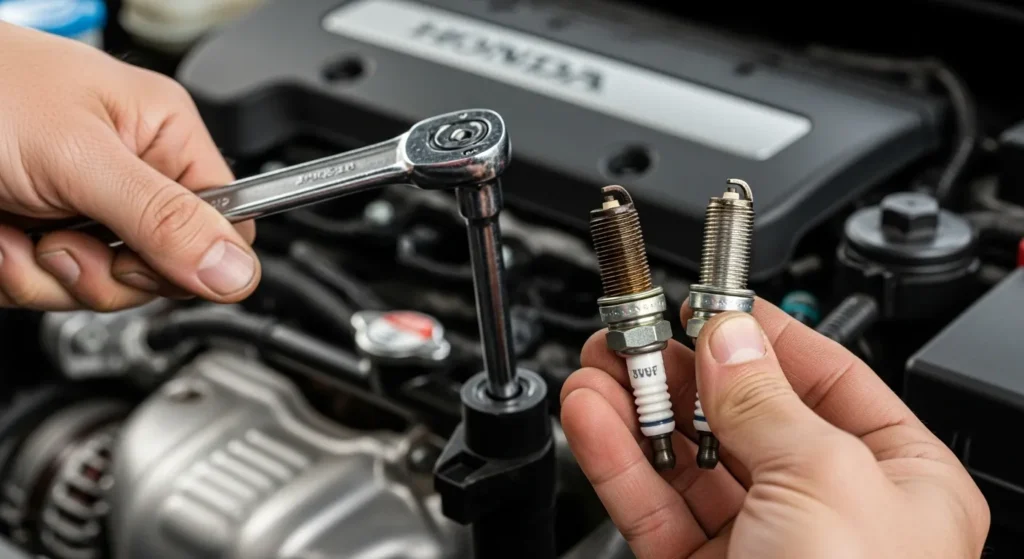
Spark plugs are key in the combustion process. Worn-out or fouled spark plugs can cause engine misfires, leading to jerky acceleration. Regularly inspecting and replacing spark plugs can help keep the engine running smoothly.
Honda Recommendation
Replace spark plugs every 60,000-100,000 miles. Use NGK or Denso iridium plugs for best results.
DIY Cost:
$40-$60 (parts only) + 30 minutes
Shop Cost:
$120-$200 (with labor)
Signs You Need New Plugs:
- Check engine light blinking
- Rough idle at stoplights
- Difficulty starting the engine
- Drop in fuel economy
Pro Tip: 2008-2012 Accords with 4-cylinder engines are easy DIY jobs. V6 models require removing the intake manifold better to hire a pro.
Related Guide: When to Replace Spark Plugs in Honda Accord – Guide 2025!
Cleaning the Mass Airflow Sensor:
The mass airflow sensor measures the air entering the engine. A dirty or faulty sensor can disrupt the air-fuel mixture, causing hesitation during acceleration. Cleaning the mass airflow sensor with the proper cleaning solution can solve this problem.
What to Use: CRC Mass Air Flow Sensor Cleaner ($8-12 at any auto parts store)
DIY Steps:
- Locate sensor between air filter and throttle body
- Disconnect electrical connector
- Remove two bolts holding sensor
- Spray cleaner on sensing wires (don’t touch them!)
- Let dry 10 minutes
- Reinstall and test drive
Cost: $10 (DIY) vs $50-100 (shop)
Time: 15 minutes
Warning: Never use brake cleaner or carburetor cleaner these will damage the delicate sensor wires.
Throttle Position Sensor Troubleshooting:
The throttle position sensor monitors the throttle position and sends this information to the engine control module. A malfunctioning sensor can cause jerky acceleration. Troubleshooting involves checking the sensor’s voltage output and ensuring it’s within the specified range.
How to Diagnose:
- Use an OBD2 scanner (free at AutoZone/O’Reilly)
- Look for codes P0121, P0122, or P0123
- Check voltage reading (should be 0.5V at idle, 4.5V at full throttle)
2013-2017 Accord Owners: Honda issued Technical Service Bulletin #16-002 for throttle body carbon cleaning on these models. Ask your dealer if this applies to your VIN.
Replacement Cost: $150-$350 (including labor)
Dealing with Carbon Buildup:
Carbon buildup on intake valves and fuel injectors can also cause acceleration hesitation. Using a fuel injector cleaning kit or having a professional clean the intake system can help. Regular use of fuel additives designed to clean the engine can prevent severe carbon buildup.
Best Products:
- Chevron Techron Concentrate ($12)
- BG 44K Fuel System Cleaner ($25)
- Sea Foam Motor Treatment ($10)
Prevention Schedule: Add fuel cleaner every 3,000 miles
Professional Cleaning: $200-$400 for intake valve cleaning (especially needed on 2013+ direct injection engines)
Real Case: I had a 2015 Accord with severe carbon buildup causing jerking. After professional intake cleaning ($280), the owner reported it drove “like new again.”
By addressing these engine-related issues, you can significantly improve the smoothness of your Honda Accord’s acceleration. Regular maintenance, including spark plug replacement and sensor cleaning, is key to preventing jerky acceleration.
What Causes Clogged Fuel Injectors and How Do They Affect Acceleration?
When your fuel injectors get clogged, it often happens due to dirt, carbon deposits, or using poor-quality fuel. When this buildup blocks fuel flow, your engine doesn’t get enough fuel for smooth combustion. As a result, your car jerks, hesitates, or struggles during acceleration.
Cost Impact:
- DIY cleaning kit: $30-50
- Professional ultrasonic cleaning: $150-$300
- Injector replacement (if damaged): $400-$800
Signs of Clogged Injectors:
- Rough idle that smooths out at higher RPM
- Black smoke from exhaust
- Failed emissions test
- Strong fuel smell
Model Alert: 2008-2012 Accords with the 2.4L engine are especially prone to injector clogging due to direct injection design.
Why Can Using the Wrong Fuel Type or Low-Quality Fuel Make My Car Jerk?
Using the wrong fuel type or low-quality fuel can make your car jerk because it affects how the engine burns fuel. Poor-quality fuel causes incomplete combustion, knocking, and clogged injectors. This leads to rough acceleration, reduced mileage, and long-term engine damage if left unchecked.
What to Use:
- Most Accords: 87 octane regular (check your owner’s manual)
- V6 models (2008-2017): 91 octane premium recommended
- Always use Top Tier gasoline (Shell, Chevron, Mobil, Costco)
Cost of Cheap Gas: Saving $3 per tank on discount gas can cost you $300+ in injector cleaning later.
Learn More: Can I Put Premium Gas in My Honda Accord – Full Guide 2025! and 2025 Honda Accord Gas Type – Must Know Fuel Guide 2025!
How Do Worn-Out Spark Plugs Lead to Engine Hesitation or Jerking?
When spark plugs wear out, they cannot produce a strong spark to ignite the air-fuel mixture fully. This weak ignition causes engine hesitation or jerking when accelerating. Replacing worn plugs provides smoother combustion, steady power, and improved fuel efficiency.
Replacement Schedule by Model:
- 2008-2012 Accords: Every 90,000 miles
- 2013-2017 Accords: Every 100,000 miles
- 2018-2025 Accords: Every 60,000 miles (turbo engines)
What Happens When You Wait Too Long:
- Misfires damage catalytic converter ($1,500-$2,500 to replace)
- Fuel economy drops 15-25%
- Engine runs rough and loses power
Why Does a Faulty Ignition System Cause Jerking During Acceleration?
A faulty ignition system fails to provide a proper spark, leading to jerking during acceleration. When spark plugs, ignition coils, or wires misfire, the engine loses power and struggles to accelerate smoothly. Fixing ignition parts restores performance and prevents further engine damage.
Ignition System Components:
- Spark plugs: $80-$200
- Ignition coils: $150-$400 (set of 4)
- Spark plug wires (older models): $60-$120
Diagnostic Codes: P0300-P0304 indicate misfires in specific cylinders
Fixing Transmission Problems That Cause Jerking:
When your Honda Accord jerks during acceleration, check for transmission problems. These issues can make your car jerk or hesitate, which is both annoying and worrying.
How to Check and Replace Transmission Fluid?
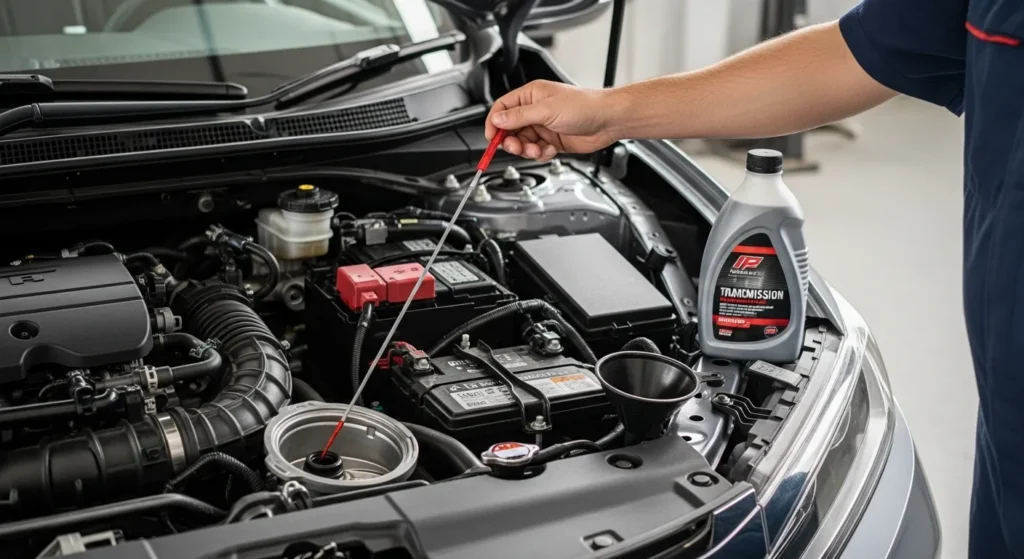
Properly checking and maintaining the transmission fluid can fix jerking. Low or dirty fluid can make the transmission malfunction. To check, find the transmission dipstick under the hood.
Pull it out, wipe it clean, and put it back in. Then, pull it out again to see the fluid level and color.
What to Look For:
- Good fluid: Bright red, slightly sweet smell
- Bad fluid: Dark brown/black, burnt smell
- Level: Between MIN and MAX marks
Fluid Change Cost:
- DIY: $60-80 (fluid only)
- Shop: $150-$250 (drain and fill)
- Full flush: $200-$350
CRITICAL for CVT Owners: 2013-2017 Accords with CVT transmissions MUST use genuine Honda CVT fluid. Using generic ATF will cause jerking and void your warranty.
Real Example: A customer used generic transmission fluid to save $40. Three months later, his CVT needed a $3,800 rebuild. Always use Honda-specified fluids.
More Details: Honda Accord Hybrid Oil Change Interval – A Full Guide 2025!
Addressing Solenoid and Sensor Issues:
Transmission solenoids and sensors control how the transmission works. If they’re not working correctly, the car can jerk. Diagnosing problems with these parts requires special tools and knowledge.
Common Codes:
- P0715: Input/Turbine Speed Sensor
- P0730: Incorrect Gear Ratio
- P2769: Torque Converter Clutch
Repair Cost: $200-$600 depending on which solenoid fails
When Transmission Repairs Require Professional Help:
Some transmission problems are easy to fix, but others need a professional. If you’re not sure about checking or changing the fluid, or if there’s a bigger issue, get a mechanic’s help.
Go to a Pro If:
- Fluid is burnt and black
- Slipping between gears
- Grinding or clunking noises
- Check engine light with transmission codes
- CVT whining sound
Average Transmission Repair Costs:
- Minor repairs: $500-$1,200
- Major repairs: $2,000-$4,000
- Full replacement: $4,000-$6,000
Why Does a Blocked Catalytic Converter Make My Car Jerk or Lose Power?
A blocked catalytic converter prevents exhaust gases from flowing out properly, which builds up pressure inside the engine. This causes your car to jerk or lose power when you accelerate. The engine struggles to breathe, reducing performance, fuel efficiency, and overall driving smoothness.
Symptoms:
- Severe power loss, especially uphill
- Rotten egg smell from exhaust
- Extreme heat under the car (can feel it through floor)
- Check engine light with code P0420 or P0430
Replacement Cost: $800-$2,500 (varies by model year)
Lifespan: Usually 150,000+ miles, but can fail early due to engine misfires
DIY Test: Use an infrared thermometer. If the outlet side is much cooler than inlet, the converter is clogged.
Concerned About Longevity? How many Miles does a Honda Accord last – Real Owner Guide!
How Does a Dirty or Clogged Air Filter Affect Engine Performance?
A dirty or clogged air filter blocks airflow to the engine, making it hard for the engine to mix air and fuel properly. This causes your engine to lose power, jerk, or use more fuel. Replacing the air filter regularly helps maintain smooth acceleration and better fuel efficiency.
Replacement Schedule: Every 15,000-30,000 miles (or annually)
Cost: $15-$40 (DIY) vs $40-$70 (shop)
Installation Time: 5 minutes (easiest maintenance task)
Performance Impact:
- Clean filter: Engine breathes freely
- Dirty filter: Up to 10% power loss, 5% worse fuel economy
Pro Tip: Check your filter every oil change. If you drive in dusty conditions, replace it twice as often.
What Are the Symptoms of a Vacuum Leak Affecting Acceleration?
A vacuum leak allows unmetered air to enter the engine, upsetting the air-fuel balance. This causes poor acceleration, jerking, and rough idling. Other symptoms include hissing noises, stalling at stops, and a check engine light. Fixing the leak helps restore smooth acceleration and stable engine performance.
How to Find Vacuum Leaks:
- Listen for hissing sounds near the engine
- Spray carburetor cleaner around intake manifold and hoses
- If engine RPM changes, you’ve found the leak
Common Leak Locations:
- Intake manifold gasket
- Brake booster hose
- PCV valve connections
- Throttle body gasket
Repair Cost: $50-$300 depending on location
Why Does a Faulty Transmission or Worn Clutch Cause Jerky Acceleration?
A faulty transmission or worn clutch can cause jerky acceleration because power doesn’t transfer smoothly from the engine to the wheels. When the clutch slips or transmission gears are damaged, your car may hesitate, surge, or shake during acceleration. Replacing worn parts restores smooth gear shifting and steady power delivery.
Manual Transmission Signs:
- Clutch pedal feels spongy
- Slipping in higher gears
- Burning smell when accelerating
- Difficulty shifting gears
Automatic/CVT Signs:
- Delayed engagement when shifting to Drive
- Shuddering at low speeds
- Slipping between gear changes
Clutch Replacement Cost: $800-$1,500 (manual Accords)
Key Reasons Worn-Out Spark Plugs Cause Jerking:
Weak ignition spark: Fails to ignite fuel properly, causing engine misfires.
Uneven fuel combustion: Results in loss of power and acceleration delay.
Carbon buildup: Old plugs collect carbon deposits, blocking spark performance.
Increased fuel consumption: The engine burns more fuel to maintain speed.
Reduced throttle response: Acceleration becomes rough and unpredictable.
Warning Signs to Watch:
- Engine misfires at idle
- Difficulty starting in cold weather
- Decreased fuel economy (3-5 MPG drop)
- Check engine light flashing
Replacement Priority: If your plugs are over 80,000 miles, replace them FIRST before diagnosing other issues.
How to Diagnose Jerking Problems in Your Honda Accord?
To diagnose jerking problems in your Honda Accord, start with basic checks like spark plugs, fuel injectors, and air filters. Use an OBD2 scanner to read error codes. Inspect the transmission fluid and catalytic converter. Regular maintenance helps identify hidden issues and keeps your Honda Accord running smoothly.
Step-by-Step Diagnostic Plan:
Week 1 (Free Checks):
- Check gas cap—loose cap triggers check engine light
- Scan for error codes (free at AutoZone)
- Inspect air filter condition
- Check transmission fluid level and color
Week 2 (Basic Maintenance – $100-200):
- Replace spark plugs if over 60,000 miles
- Clean MAF sensor with proper spray
- Add fuel injector cleaner to tank
- Replace air filter if dirty
Week 3 (Professional Help – $100-150):
- Compression test
- Fuel pressure test
- Transmission computer scan
- Exhaust back pressure test
Most Common Error Codes:
- P0300-P0304: Cylinder misfires
- P0171/P0174: Lean fuel mixture
- P0420/P0430: Catalytic converter
- P0715: Transmission speed sensor
What Should I Do If My Car Keeps Jerking When I Accelerate?
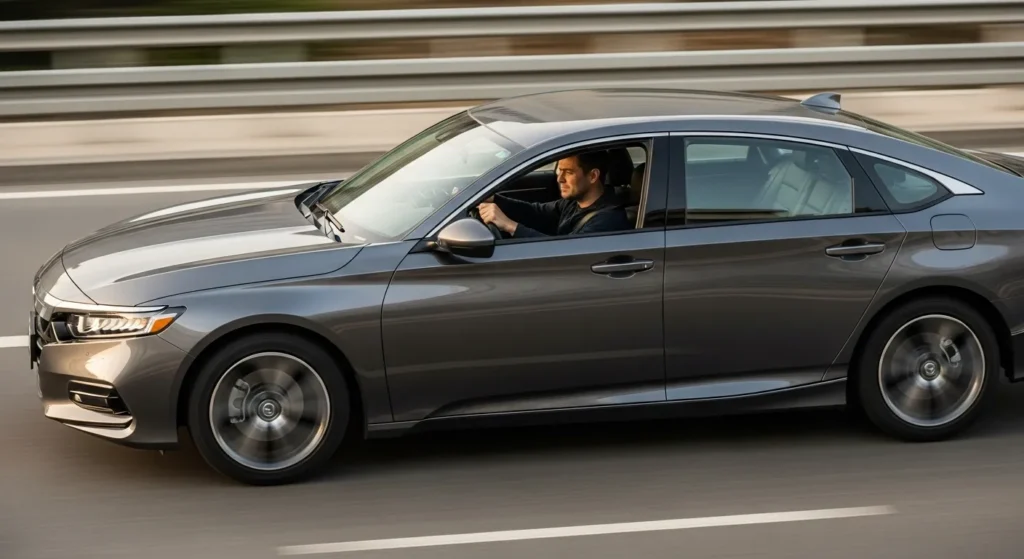
If your car keeps jerking when you accelerate, start by checking simple issues like spark plugs, air filters, and fuel injectors. Make sure you’re using good-quality fuel and the correct transmission fluid. If the problem continues, visit a mechanic for a complete engine and transmission inspection.
Immediate Actions (This Week):
- Switch to Top Tier gas (Shell, Chevron, Mobil)
- Add fuel system cleaner to your tank
- Check for obvious vacuum leaks (listen for hissing)
- Scan error codes for free at any auto parts store
Do not Ignore These Warning Signs:
- Check engine light stays on or flashes
- Burning smells from engine or transmission
- Grinding or clunking noises
- Smoke from exhaust
When to Stop Driving Immediately:
- Severe power loss (can’t maintain highway speed)
- Transmission won’t shift
- Overheating engine
- Loud grinding noises
Cost of Waiting:
A $150 fix today can become a $2,000+ repair in 3-6 months.
Model-Specific Issues You Should Know
2008-2012 Accords (8th Generation):
- 4-cylinder engines: Prone to fuel injector clogging
- V6 models: VCM (Variable Cylinder Management) can cause judder at 40-50 mph
- Solution: VCM Muzzler device ($150) or ECU reprogramming
Check Your Oil: 2008 Honda Accord oil type – Discover the Right Oil!
2013-2017 Accords (9th Generation):
- CVT transmission: Early models had software glitches—verify recall 15V-574 was performed
- Earth Dreams engines: Direct injection causes carbon valve buildup
- Solution: Walnut blasting service ($300-500) every 60,000 miles
Research Before Buying: What years of Honda Accord to avoid – Must Read Guide 2025!
2018-2025 Accords (10th Generation):
- 1.5T Turbo: Some jerking from turbo lag is normal
- Oil dilution issue: Fuel mixing with oil—check for TSB updates
- Solution: Software update at dealer (usually free under warranty)
Preventive Maintenance to Avoid Jerking
Every 3,000 Miles:
- Add fuel system cleaner (Techron, BG 44K)
- Visual inspection of hoses and belts
Every 7,500 Miles:
- Check transmission fluid level
- Inspect air filter
Every 30,000 Miles:
- Replace engine air filter
- Clean throttle body
- Inspect spark plugs
Every 60,000 Miles:
- Replace spark plugs (iridium type)
- Professional fuel injector cleaning
- Replace transmission fluid (CVT models especially)
Every 100,000 Miles:
- Replace all ignition coils
- Check catalytic converter efficiency
- Inspect all vacuum lines and hoses
- Carbon cleaning service (direct injection engines)
DIY vs. Professional Repairs: Cost Comparison
| Repair Task | DIY Cost | DIY Time | Shop Cost | Difficulty |
| Air Filter | $15-25 | 5 min | $40-70 | Easy |
| Spark Plugs (4-cyl) | $40-60 | 30 min | $120-200 | Easy |
| Spark Plugs (V6) | $60-80 | 2 hours | $200-300 | Hard |
| MAF Cleaning | $10 | 15 min | $50-100 | Easy |
| Fuel Injector Cleaner | $15-30 | 5 min | $150-300 | Easy |
| Transmission Fluid | $60-80 | 1 hour | $150-250 | Medium |
| Ignition Coils | $100-200 | 45 min | $300-500 | Medium |
| Catalytic Converter | Not Recommended | N/A | $800-2,500 | Pro Only |
My Recommendation: DIY for spark plugs, air filter, and MAF cleaning. Hire a pro for transmission work and catalytic converter replacement.
Considering a Used Accord: How much is a used 2010 Honda Accord worth? – Guide 2025!
FAQ’s:
1. Can low-quality fuel cause my Honda Accord to jerk during acceleration?
Yes, using low-quality or contaminated fuel can cause jerking when accelerating. Poor fuel quality leads to incomplete combustion and clogged injectors, affecting engine performance and smoothness.
2. Should I replace spark plugs if my Honda Accord jerks while accelerating?
Yes, worn-out or dirty spark plugs are a common cause of jerky acceleration. Replacing them helps restore proper combustion, improves fuel efficiency, and ensures smoother driving performance.
3. Can low transmission fluid make my Honda Accord jerk when I accelerate?
Yes, low or dirty transmission fluid can cause jerking during acceleration. It prevents smooth gear shifting and increases wear on transmission components, resulting in rough performance.
4. What are the most common reasons a Honda Accord jerks when accelerating?
The most common reasons include dirty fuel injectors, worn spark plugs, a faulty ignition system, or transmission issues. Regular maintenance helps prevent these problems and ensures smooth acceleration.
5. How can I fix jerking issues in my Honda Accord without going to a mechanic?
Start by checking spark plugs, cleaning the mass airflow sensor, and ensuring you’re using good-quality fuel. If jerking continues, inspect the air filter and fuel injectors before seeking professional help.
Conclusion:
Jerking during acceleration in your Honda Accord often signals issues like dirty fuel injectors, worn spark plugs, or low transmission fluid. Regular maintenance and the use of high-quality fuel can restore smooth performance. Addressing these jerking problems early ensures better acceleration, improved fuel economy, and long-term engine reliability.
Must Read: What years of Honda Accord to avoid – Must Read Guide 2025!